
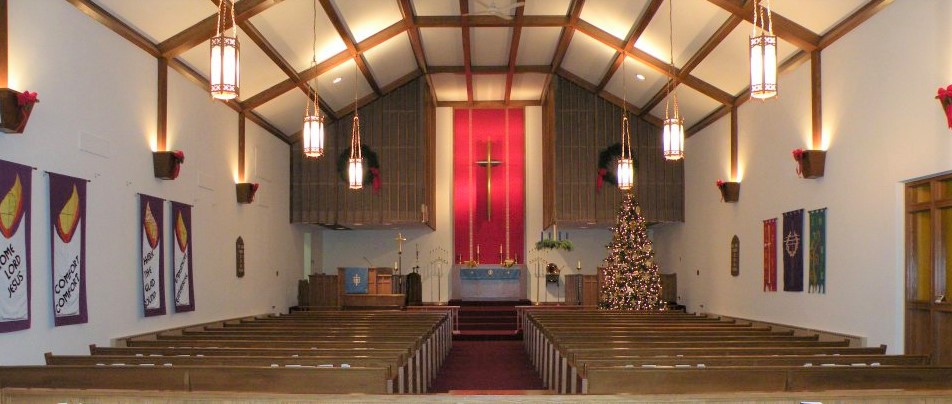
About St. Matthew Lutheran Church
Welcome!
We are a congregation of the Evangelical Lutheran Church in America, rooted in the faith and tradition of the ancient Western Church, but attuned to the fresh whispers of the Spirit in this time and place. For almost two centuries, St. Matthew Lutheran has been a center of worship and service here in Martinsburg, and we trust God is leading us into a faithful future.
No words or pictures on a webpage can adequately convey who we are, so in the timeless words of our Savior Jesus Christ, we invite you to “come and see.” Worship with us, visit with us, and see if God is calling you to be a part of the gracious work that God is unfolding all around us and through us here at St. Matthew Lutheran Church.
What To Expect
During the school year, we offer Sunday school for all ages at 9:15 AM. Worship begins at 10:30AM (9:30 during the summer).
Worship is one gathering for all people; there is no age restriction (or dress code). Yes, we understand that kids are sometimes heard as well as seen in worship; we prefer the lively presence of children to the silence of their absence.
We have a rich tradition of music with a hymnal that includes over 800 songs. Our accompaniment is usually by piano or organ, and a choir often leads the singing and provides special music.
St. Matthew Lutheran Church practices a “liturgical” form of worship, following the same basic pattern the Christian church has used since its beginning. “Liturgy” means the work of the people and reminds us that worship is participatory for everyone – an active undertaking rather than a spectator event; the pastor, readers, and assisting ministers lead, and the rest of the congregation responds in song and prayer. The liturgy, which is taken directly from Holy Scripture, includes four broad categories:
Gathering
We are gathered and welcomed into worship through word, song, and prayer. This portion of the service also typically includes an opportunity as a whole congregation to corporately confess to God our sinfulness and to hear God’s gracious promise of forgiveness.
Word
We usually hear four separate readings from the Holy Bible. Normally this includes a reading from the Old Testament, all or a portion of a Psalm, a reading from the New Testament (other than the four Gospels), and a Gospel reading from either Matthew, Mark, Luke, or John. Our readings cycle every three-years (referred to as a “Lectionary”) so that we hear a variety of what is included in God’s Word. The Pastor’s sermon is a continuation of the proclamation of the Good News of Jesus Christ; the sermon is usually a little less than 15 minutes long.
Sacrament
Here at St. Matthew, we celebrate the Lord’s Supper (also referred to as “Communion” or the Eucharist”) each Sunday. As Lutherans, we believe that Christ is truly present in, with, and under the bread and wine. How does this happen? We do not pretend to know or understand, but in faith we believe that we receive the body and blood of Jesus. This is Jesus’ table, not the table of St. Matthew Lutheran Church, so you are invited to commune whether or not you are a member and regardless of age. If you do not want to commune, the Pastor can also offer a blessing.
Sending
This brief portion of the service includes a final blessing upon the congregation as we are sent out into the world by God to bless and serve others.
Liturgical worship can be confusing at first, but don’t worry – there’s a bulletin to help you follow the pattern of worship and other people around to guide you or whom can simply watch and follow. We alternate between standing and sitting at different parts of the service, but those with limited mobility are welcomed to remain seated (and may stay in the pew and have communion brought to them as needed).
Why come to St. Matthew?
If you are not a member of our congregation, you may be asking, “Why should I come to St. Matthew?” Here are just a few reasons:
- Lutheran theology is centered on grace—God’s free gift of love to all—and calls us to love without judgment. If you have felt excluded elsewhere, you will find the Lutheran church and St. Matthew in particular to be a community of welcome and new life.
- During Sunday worship, you will hear the good news of God’s love through scripture, prayer, preaching, and song, and you are guaranteed an encounter with God through Holy Communion.
- Worship gathers us in but then sends us back out to serve. Our experience together that begins in Sunday worship transforms us for new living, relevant to whatever we do, in all of our relationships, all week long.
We are not perfect and don’t claim to have all of the answers or a monopoly on the truth. Nevertheless, we do believe that God offers something unique to and through us. Come and see! Perhaps you’ll find that here at St. Matthew there’s a place at the Lord’s Table already set and waiting for you.